
Windows
Tracking Windows Server 2019 build numbers is critical for IT admins managing updates, security patches, and system compatibility. This list covers all official build versions—from pre-release to final—with key details to help you identify and deploy the correct version for your environment.
Windows Server 2019 Insider Preview Build 17623
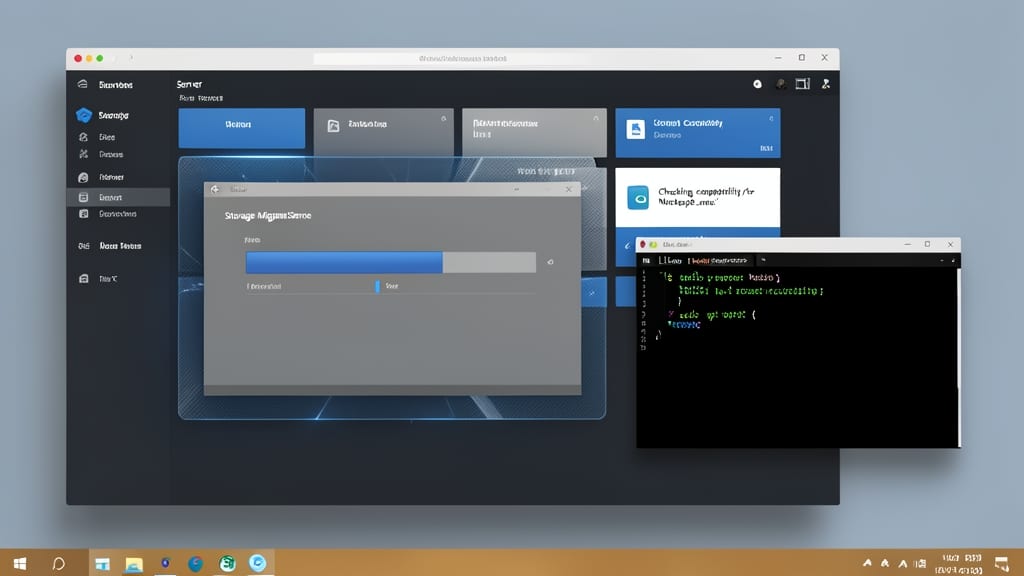
Curious about what Windows Server 2019 looked like before it hit production? Build 17623 was Microsoft’s first public Insider Preview, offering a sneak peek at groundbreaking features like the Storage Migration Service and early Linux integration. This build let admins test compatibility with legacy systems before the final release, making it a critical step in refining the OS for enterprise environments.
The preview included Windows Admin Center integration and Hyper-V improvements, though stability wasn’t yet production-grade. The build number 17623 reflects its experimental nature—part of the Windows Server Insider Program—where Microsoft gathered feedback on features like Windows Subsystem for Linux (WSL) and Storage Replica. For IT teams with older hardware or mixed environments, this was the perfect lab for identifying potential roadblocks.
Ideal for test labs and compatibility validation, this build is now obsolete but remains historically significant for admins who need to understand the evolution of Windows Server 2019. ⚡
Windows Server 2019 Semi-Annual Channel Build 17763

If you’re a developer bridging Windows and Linux environments, Windows Server 2019 Semi-Annual Channel Build 17763 is your gateway to seamless hybrid workflows. This build introduced Windows Subsystem for Linux 2.0 (WSL 2.0), replacing the original WSL with a full Linux kernel running as a lightweight VM—no dual-booting required. It also brought improved container support with Docker integration, letting you test containerized apps directly on Windows Server before deploying to Azure or Kubernetes.
The 17763 build number marks a major leap from earlier versions, offering faster file system performance (thanks to WSL 2.0’s virtual hard disk) and better compatibility with Linux tools like systemd. For container workloads, it included Windows Server Containers with enhanced networking and storage options, making it easier to migrate apps between environments. Microsoft’s focus here was on developer productivity, not just enterprise stability.
Perfect for DevOps teams, cloud developers, or sysadmins testing hybrid workloads, this build is the foundation for modern Windows Server deployments in containerized or mixed environments. ⚡
Windows Server 2019 Final Release Build 17763.132

When you’re ready to deploy Windows Server 2019 in production, Build 17763.132 is the gold standard—Microsoft’s official RTM (Release to Manufacturing) version. This build marks the final, battle-tested iteration, where every feature is polished and ready for enterprise workloads without the instability of pre-release versions.
Key highlights include Shielded VMs for secure virtualization (encrypted VMs that can’t be accessed even if stolen), Hyper-V enhancements like production checkpoints, and full support for Storage Migration Service and Windows Admin Center. The build number itself (17763.132) reflects the mature state: the 17763 base aligns with the OS version, while .132 indicates the cumulative updates baked in for stability.
This is the ideal starting point for any production environment—whether you’re running virtualized workloads, hybrid cloud setups, or on-premises servers. For IT admins, it’s the safe choice before considering LTSC or updates. ✨
Windows Server 2019 Update Build 18362.30

If your organization relies on centralized management and compliance, Windows Server 2019 Update Build 18362.30 is the first critical post-RTM update you need to know about. Unlike earlier builds, this version bridges the gap between the stable RTM release and enterprise-grade management tools.
This update introduces full support for Windows Admin Center 1809, enabling features like cluster management, extension frameworks, and PowerShell remoting—all from a single pane of glass. The enhanced security baselines include stricter default configurations for RDP, SMB, and local admin policies, making it easier to meet compliance requirements like CIS benchmarks or FIPS 140-2.
Ideal for IT admins managing multi-server environments or hybrid cloud setups, this build ensures smoother patching workflows and tighter security controls without sacrificing stability. ⚡
Windows Server 2019 Update Build 18363.535

If your servers handle sensitive data or face public exposure, Windows Server 2019 Update Build 18363.535 is a non-negotiable security patch. This update directly targets critical vulnerabilities in SMB (Server Message Block) and RDP (Remote Desktop Protocol), two common attack vectors for ransomware and unauthorized access.
The patch includes fixes for CVE-2020-0796 (SMBv3 "Wormable" bug) and multiple RDP-related flaws that could allow elevation of privilege. Microsoft classified these as high-severity risks, making this update mandatory for environments with remote access or shared file systems. Unlike earlier builds, this one prioritizes zero-day protection over new features, ensuring your infrastructure stays locked down.
This build is a must-install for financial institutions, healthcare providers, and any business with exposed RDP gateways. Don’t wait for automated updates—deploy this immediately to close known exploit paths. 🔧
Windows Server 2019 LTSC Build 17763.2066
When stability isn’t just preferred—it’s a requirement—Windows Server 2019 LTSC Build 17763.2066 delivers the gold standard for 5+ year deployments in healthcare, finance, or government sectors. Unlike semi-annual updates, this LTSC version locks down to a minimal feature set, ensuring predictable performance and compliance with strict regulatory timelines.
Built on the same core as the final release (17763.132), this build skips non-critical updates, reducing patch fatigue while maintaining 10 years of extended support (vs. 5 years for standard editions). The zero-configuration approach means no unexpected feature creep—just the essentials like Shielded VMs and Hyper-V that regulated industries depend on.
Perfect for environments where uptime and auditability are non-negotiable, this is the battle-tested setup for mission-critical infrastructure. ✨
Windows Server 2019 Datacenter Edition Build 17763.1941

When your workload demands unlimited virtualization and hyper-converged scalability, Windows Server 2019 Datacenter Edition Build 17763.1941 delivers the powerhouse you need. This isn’t just another server OS—it’s the highest-tier edition designed for enterprises running massive VM farms or cloud-scale storage.
You get Storage Spaces Direct (S2D) for software-defined storage with 16-node clusters, plus Hyper-V enhancements like production checkpoints and NVMe support. The unlimited virtualization rights mean no licensing headaches when scaling workloads—critical for hybrid cloud or on-premises data centers.
Perfect for cloud providers, large enterprises, or hyper-converged infrastructure (HCI) deployments, this build turns raw hardware into a flexible, high-performance platform. 💪